Laying the Groundwork for an Environmental Monitoring Network for Manoomin
Restoration in Georgian Bay
05/01/2026 - 04/30/2028
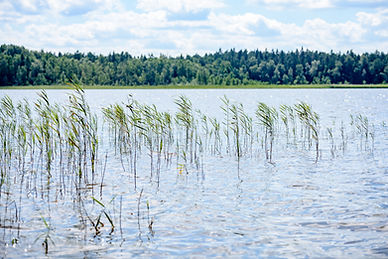
This project proposes to lay the groundwork for a comprehensive environmental monitoring network in partnership with University of Michigan, Loyola University of Chicago and First Nation communities to support their potential Manoomin (wild rice) restoration efforts in Georgian Bay. The project will deploy advanced environmental sensors to characterize the physical, chemical, and biological conditions at existing and potential Manoomin restoration sites, providing the evidence base needed to guide restoration site selection, inform adaptive management decisions, and evaluate restoration success.
Major Environmental Issue
Coastal Wetland and Manoomin Restoration in Georgian Bay
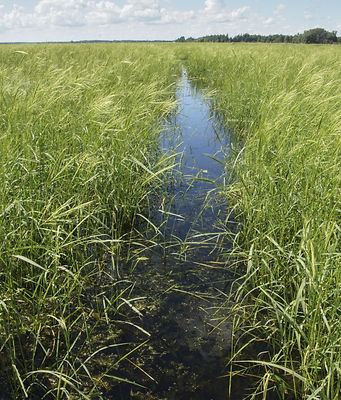
Manoomin restoration represents both an ecological and cultural imperative for Indigenous communities throughout the Great Lakes. Wild rice beds provide essential habitat for fish, waterfowl, and invertebrates while stabilizing sediments and improving water quality. Despite its ecological importance, Manoomin has experienced significant decline in Georgian Bay due to water level fluctuations, increased wave action, development pressures, pollution, and climate change impacts. Successful restoration requires understanding the complex interplay of environmental factors that determine Manoomin viability, including water depth, temperature, sediment composition, nutrient availability, water clarity, and seasonal hydrology. However, detailed environmental characterization of Manoomin habitat conditions in Georgian Bay is limited, making it difficult to predict restoration success or identify optimal restoration sites.
Project Objectives
-
Establish the foundation for an environmental monitoring network at potential restoration sites in Georgian Bay tribal and community partners.
-
Generate comprehensive baseline environmental data characterizing water quality, hydrology, sediment conditions, and physical habitat at Manoomin sites across two growing seasons.
-
Begin to build community relationships for long-term environmental monitoring and data-driven adaptive management.

Sustainability & Long-Term Impact
1
Maintenance/Monitoring Commitments
The project team commits to deploy, maintain and retrieve environmental monitoring equipment during the two-year project.
2
Capacity-Building/Knowledge Transfer
Through engagement with the external partners, the project team will start to build relationships with local indigenous communities, discover areas of Georgian Bay that may be ready for Manoomin restoration, and plan for the monitoring phase of the project. These external partners may include the Indigenous Great Lakes Network, Georgian Bay Mnidoo Gamii Biosphere, First Nation communities including Chippewas of Nawash/Saugeen Ojibway Nation. The project team will use the final project meeting to work with external partners on knowledge transfer and collaborating on future work.
Expected Outcomes
01
High-resolution, two-year environmental dataset characterizing conditions at multiple potential Manoomin restoration sites across seasonal and annual cycles.
02
Identified sites in Georgian Bay that are suitable for restoration.
03
Quantified relationships between environmental parameters (water quality, hydrology, sediment characteristics) and potential Manoomin restoration success.
04
Development of a Manoomin habitat suitability index derived from multivariate environmental data.
05
Enhanced understanding of how water level fluctuations, climate variability, wave exposure, and water quality affect Manoomin growth and survival.



Goals in Line with Georgian Bay Forever's Mission
This project directly advances Georgian Bay Forever's mission of keeping Georgian Bay healthy and thriving forever through multiple interconnected pathways:
Aquatic Ecosystem Health: Supporting Manoomin restoration directly enhances Georgian Bay's ecological integrity and resilience.
Water Quality Monitoring: The environmental monitoring network will generate valuable high-resolution data on nearshore Georgian Bay water quality, filling critical gaps in understanding of shallow coastal areas.
Climate Resilience and Adaptation: The project will document how climate-related stressors—including water temperature changes, altered ice phenology, water level fluctuations, and extreme weather events—affect sensitive coastal wetland habitats.
Automation and Innovation: The automated monitoring network demonstrates how technology can enhance environmental stewardship, providing continuous data streams that would be impossible to achieve through manual sampling.
Project Updates

Project Updates
Milestones
As the project gets underway, GBF will track and publicize updates on the progress made.
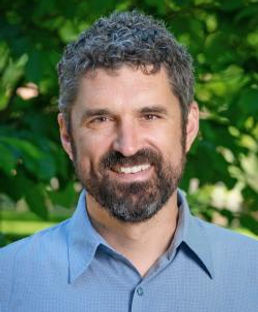
Dr. Andrew Gronewold -
Principal Investigator
Associate Professor, Sustainable Systems, Climate + Energy, Water, Cross-cutting
University of Michigan School for Environment and Sustainability (SEAS)
-
PhD, Duke University (Environmental Science and Policy)
-
BS, Cornell University (Civil and Environmental Engineering)
Professor Gronewold’s research interests lie in hydrological modeling, with a focus on propagating uncertainty and variability into model-based water resources management decisions. His specific research areas include predicting runoff in ungauged basins, monitoring and understanding water quality dynamics in coastal areas, and incorporating probability theory and Bayesian statistics into watershed-scale data sets and forecasting tools. Professor Gronewold is also the lead PI for the US on the NSF-funded Global Center for Understanding Climate Change Impacts on Transboundary Waters.
He holds adjunct appointments in the U-M Department of Civil and Environmental Engineering and the Department of Earth and Environmental Sciences. Prior to his appointment in SEAS, he worked in the NOAA Great Lakes Environmental Research Laboratory as a hydrologist and physical scientist.