

Mapping the Microplastics Threat in Georgian Bay: Next-Generation Methods for Plastics Distributions and Ecotoxicology
01/04/2026 - 31/03/2031
Microplastics (MPs) are identified contaminants in Georgian Bay’s aquatic ecosystems. These tiny plastic particles are widespread in Great Lakes habitats and have been linked to negative impacts on species health and ecosystem resilience. Despite increasing concern from communities and policymakers, gaps remain in standardized monitoring and understanding of their risks—especially for critical benthic habitats. As a result, the threat that they pose is not well understood. This project, led by University of Michigan researchers Dr. Melissa Duhaime and Dr. Anne McNeil, in collaboration with Rochester Institute of Technology applied mathematician, Dr. Matthew Hoffman, will assess microplastics pollution across Georgian Bay’s waters and sediments using state-of-the-art spectroscopic techniques and statistical frameworks to better assess transport, fate, and ecological risks. The team will map plastic pollution at an unprecedented level of detail, quantify particle size ranges paired with new methods for error estimation and data harmonization, and apply these new data to develop hydrodynamic models of microplastics movement in Georgian Bay. Simultaneously, the team will conduct laboratory studies to determine the impacts of microplastics on benthic organism health, to identify thresholds where microplastics begin to impact Georgian Bay’s ecosystem. By generating open-access datasets, educational community resources, and evidence-based recommendations, this project bridges the gap between science and policy and supports Georgian Bay stewardship.
Major Environmental Issue
Microplastics (MPs) in the Great Lake's Water
MPs are known contaminants in Georgian Bay. They accumulate in water and sediment and can be ingested by aquatic organisms, with negative impacts recognized at all biological levels. While we have witnessed rising awareness and some legislative action (or at least discussion), there are yet significant gaps in our understanding of MPs distributions and effects, especially in benthic (bottom-dwelling) habitats. The data that exist are inconsistent, with most counts and toxicity studies spanning the largest particle size classes, whereas most risk is incurred by the smallest size classes. These knowledge gaps make it difficult to assess real-world risks and thereby develop meaningful policy and management guidelines to protect Georgian Bay, and all of the Great Lakes, from the threat posed by MPs pollution.
Project Objectives
Quantify MP exposures by size, concentration, type, and error across Georgian Bay habitats, assess dose-response relationships and biological thresholds for sludge worm (T. tubifex) and flathead minnows (P. promelas) as indicators of benthic and near-bottom ecosystem health, and the potential for trophic transfer between them.

Sustainability & Long-Term Impact
1
Long-Term Stewardship Plan
The long-term stewardship of Georgian Bay will be supported through open data and sampling-protocol sharing and continued community engagement. Project protocols will be integrated into regional monitoring programs, facilitated by Georgian Bay Forever and local partners, enabling ongoing assessment of MP pollution and ecosystem health. Maintaining connections with Indigenous organizations and regional networks will ensure stewardship approaches reflect local values and traditional knowledge. The project’s open-access datasets will guide management, inform regional monitoring and mitigation policy.
2
Maintenance/Monitoring Commitments
We are committed to supporting the long-term maintenance and monitoring of Georgian Bay through sustained relationships and support beyond the two year period of this project.
We expect this to take the form of participating in town hall style talks and presentations with community members, offering our scientific expertise for monitoring and policy development or other needs, and in ensuring continued open access to our data products and protocols.
3
Capacity-Building/Knowledge Transfer
We expect knowledge exchange to begin with early conversations in sampling plan and protocol development, to ensure areas of local interest are included in the study and that water is sampled in respectful ways.
Open-access datasets and resources will support knowledge sharing across the region. Collaborative efforts will strengthen local expertise and support rightholders and stakeholders to continue monitoring, advocacy, and stewardship.
Expected Outcomes
01
Occurrence and distribution maps for microplastics in water and sediments of Georgian Bay
02
Analytical error profiles for three spectroscopic and one computer tomography method(s)
03
Species sensitivity curves and threshold data for sludge worm and flathead minnow under realistic MPs exposures
04
Data to inform activities of GBF, A/OFRC, local communities, and policymakers
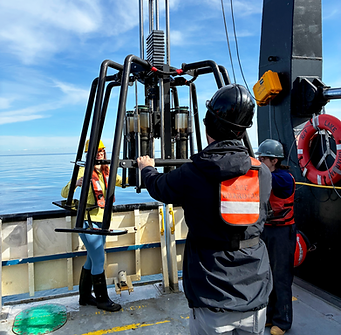


Goals in Line with Georgian Bay Forever's Mission
-
Protecting aquatic ecosystems and water quality, by generating region-specific MPs occurrence and effect data to support evidence-based management and restoration efforts for Georgian Bay,
-
Funding and disseminating research, by developing rigorous protocols and analyses to ensure high-quality, transparent research that is accessible to communities and governments,
-
Supporting public education on environmental protection, by generating new knowledge for workshops, websites, and educational materials for use in schools and activities to support GB stewardship,
-
Preserving water as a fundamental right, by identifying the risks and impacts of MPs, this project strengthens Georgian Bay’s claim to healthy, accessible water for all.
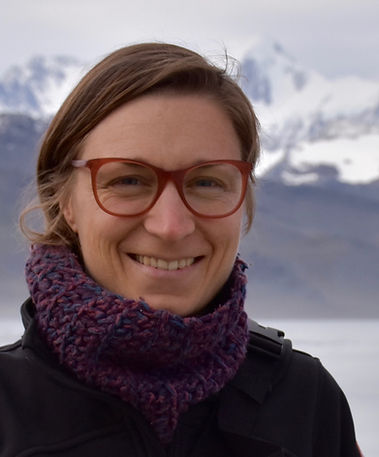
Melissa Duhaime -
Principal Investigator
Associate Professor; Interim Director for the Frontiers Program - Ecology and Evolutionary Biology
Regents of the University of Michigan (U-M)
-
Postdoctoral Fellow, University of Arizona, EEB (Marine viral genomics) - 2011
-
Ph.D., Max Planck Institute for Marine Microbiology, with distinction (Bioinformatics) - 2010
-
B.A., Cornell University, Biology (Microbiology) - 2005
Research Areas(s)
-
Microbial and Viral Ecology in Aquatic Systems: Investigates microbial virus-host coevolution, viruses of harmful algal blooms, and the role of viruses in carbon cycling in marine—including the Southern Ocean—and freshwater environments.
-
Microbiology of Microplastics Pollution: Studies prevalence, fate, and impacts of microplastics in aquatic ecosystems, with a focus on microbial communities involved in degradation.
-
Natural Fiber Textile Systems and Regenerative Agriculture: Studies flax and other natural fiber crops to support regenerative agriculture and bioregional natural fiber economies as a strategy to support alternatives to synthetic textiles.
-
Community Engagement, Storytelling, and Science Education: Collaborates with community members, through projects like the Detroit River Story Lab, to co-develop science curricula that integrate local environmental research, storytelling, and community perspectives, fostering participatory learning and environmental justice.
Project Updates
July 23, 2026
Research Announced by the Rochester Institute of Technology
In their news article, "RIT professor expands Great Lakes microplastics research to Georgian Bay", announces that professor Matthew Hoffman will work alongside principal investigator Melissa Duhaime on the project to research microplastic pollution in Georgian Bay.