
Methylmercury Formation in Georgian Bay and the Influence of Invasive Quagga Mussels
01/07/2026 - 30/06/2031
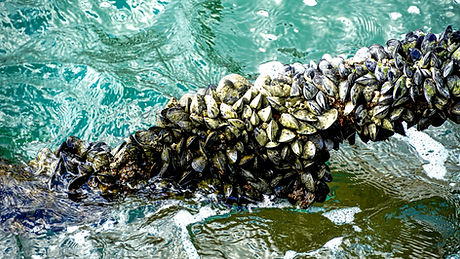
Despite declining regional emissions, mercury (Hg) remains a persistent threat to Georgian Bay, as levels in fish remain high enough to warrant sustained fish-consumption advisories. Hg accumulates in the food web as neurotoxic methylmercury (MeHg), which is produced by bacteria in the environment. This study seeks to characterize where in Georgian Bay this toxic MeHg is produced. Furthermore, we aim to investigate how the invasive Dreissenid mussel, which has fundamentally rewired the Bay's ecology, impacts the microbial production of MeHg.
Major Environmental Issue
Mercury (Hg) in Aquatic Ecosystems
In the Laurentian Great Lakes, including in Georgian Bay, the Dreissenid mussel invasion has fundamentally altered the biogeochemistry and aquatic ecology of these systems due to benthification, the shift from a pelagic (open water)-based food web to a benthic (near sediment)-based food web.
Project Objectives
The overarching goal of this project is to provide an initial insight into where MeHg production occurs in Georgian Bay and what ecosystem factors influence the localization and rate of that process. In particular, we aim to identify the biogeochemical cycles that drive MeHg production through microbial activity and characterize the impact of invasive Dreissenid mussels. We will accomplish these goals using a highly interdisciplinary approach that our team has deployed in other ecosystems. The secondary goal of this project is to develop a foundation for future, more detailed studies in the Georgian Bay ecosystem. The data that we generate will provide key insights on their own, but a more comprehensive understanding of the Hg cycle in Georgian Bay would require additional work in the future. Our goal is that the work described here (1) provides excellent seed data to further investigate these questions in the future, (2) results in long-lasting partnerships with individuals and organizations in the area, such as Georgian Bay Forever, that will also facilitate additional future projects, and (3) provides initial seed data to incorporate Georgian Bay into biogeochemical-hydrodynamic models of Hg cycling in the Great Lakes.

Sustainability & Long-Term Impact
1
Long-Term Stewardship Plan
The primary long-term output of this project will be the creation of a comprehensive baseline dataset of mercury biogeochemistry that will be maintained as a permanent public resource. To ensure long-term stewardship, all validated data, including mercury speciation profiles, metagenomic sequences, and methylation rates, will be archived in open-access repositories; all water chemistry data will be released as a while the metagenomic data will be stored on the NCBI portal. These platforms ensure that the data remains accessible to researchers and policymakers indefinitely, without the risk of loss due to institutional shifts.
2
Maintenance/Monitoring Commitments
While the intensive sampling phase of this project is scheduled for five years with no planned monitoring efforts going forward, we do predict that this project will provide seed data for additional work going forward. The long-term goal of our research team is to develop detailed coupled biogeochemical-hydrodynamic models that describe Hg cycling across the Laurentian Great Lakes. As our research team begins to develop these models, we are committed to integrating Georgian Bay as well. Thus, Georgian Bay will need to become a permanent focal point of our regional assessments. We anticipate that this proposed project will serve as a foundation for future studies and potential long-term monitoring; the insights gained here will likely necessitate subsequent follow-up studies and sampling trips to track how mercury pathways evolve as mussel populations and climatic conditions shift in the coming decade. We also aim to develop collaborations through this proposed project that will aid in developing a monitoring approach on Georgian Bay.
3
Capacity-Building/Knowledge Transfer
A core component of this project is the transfer of technical knowledge from the academic and federal research level to the local Georgian Bay community. By providing public-facing outreach materials, such as a tailored "Georgian Bay Mercury Fact Sheet" and a presentation deck for stakeholders, we are building the base of knowledge about Georgian Bay. We also hope that the public availability of the water chemistry and molecular sequencing data will encourage other scientists to develop research programs on Georgian. However, the most important capacity-building that we aim to do through this project is developing working relationships with local and regional scientists and citizens to enable future work on Georgian Bay. While the project outlined here will provide an immense amount of information, a true detailed understanding of the Hg cycle would take much longer; we hope that by develop these relationships we can continue to grow and develop this work over the years to come.
Expected Outcomes
01
Community empowerment and engagement: Recognizing that science is only as effective as its communication, we will initially cultivate a relationship with various groups with an interest in environmental preservation of Georgian Bay, such as Georgian Bay Forever. Through these connections, we will disseminate a "Georgian Bay Mercury Fact Sheet" and a series of presentations tailored for non-scientists translate our data into clear explanations of how global and regional changes affect the safety of local fish. We will also build dockside outreach events into sampling efforts to provide the public an opportunity to see our work.
02
Scientific publication: We will produce a high-impact, peer-reviewed manuscript for the Journal of Great Lakes Research detailing our findings in this system.
03
Accessible data: A fully verified, QA/QC-compliant dataset will be made available via public repositories. This ensures that local agencies, concerned citizens, environmental organizations, other scientists, or any other interested parties, will have open and permanent access to all the data that we generate as part of this work.

Goals in Line with Georgian Bay Forever's Mission
The proposed research is strategically aligned with the core pillars of the Georgian Bay Forever mission: to protect, enhance, and restore the aquatic ecosystem through accredited research and public education. While the global community has recognized the threat of mercury through the Minamata Convention, international treaties alone cannot address the unique internal stressors facing Georgian Bay.
Our project moves beyond global emission trends to focus on the local environmental determinants, specifically water quality, natural gradients in constituent loading, and the invasive mussel crisis, that dictate the toxic burden of Hg in Georgian Bay’s food web.
Project Updates

Project Updates
Milestones
As the project gets underway, GBF will track and publicize updates on the progress made.
Dr. Benjamin D. Peterson -
Principal Investigator
-
PhD, Environmental Chemistry and Technology, University of Wisconsin - Madison, 2021
-
-BSc, Biochemistry, State University of New York at Geneseo, 2012
Dr. Ben Peterson is an Assistant Professor at the University of Wisconsin – Milwaukee in the School of Freshwater Sciences. Dr. Peterson’s research focuses on contaminant and microbial biogeochemistry, with a specific emphasis on using advanced microbial methods to link water quality conditions and biogeochemical cycles to contaminant transformations. Much of his work has focused on microbial mercury methylation. His work has spanned the United States and a wide range of ecosystems, including thawing permafrost in Alaska, coastal peatlands in the Florida Everglades, arid western reservoirs, eutrophic temperate lakes in Wisconsin, and mining-impacted lakes in the Upper Peninsula of Michigan. His current research is focused on contaminant cycling in the Great Lakes and their watershed and using culture-based methods to identify ecological underpinnings of microbial-contaminant interactions. His research is highly interdisciplinary and collaborative, and he has worked extensively with federal and state labs, private partners, and other academic laboratories.
