
Building Coastal Resilience in Georgian Bay - An Interview with Dr. Pengfei Xue
Updated: Aug 4
In strategic partnership with an anonymous foundation, Georgian Bay Forever was chosen in 2026 to select for funding five standout research projects aimed at fortifying Georgian Bay’s ecosystem. Due to disbursement requirements, this funding could only be given to organizations registered in both the US and Canada, so while GBF could not directly receive funding, we have the honour of choosing and facilitating five projects directly in line with our mission to protect and conserve Georgian Bay through scientific research for long-term impact.

Project: Building Coastal Resilience in Georgian Bay
Principal Investigator: Dr. Pengfei Xue
Institution: Michigan Technological University
How would you describe this project to someone you just met?
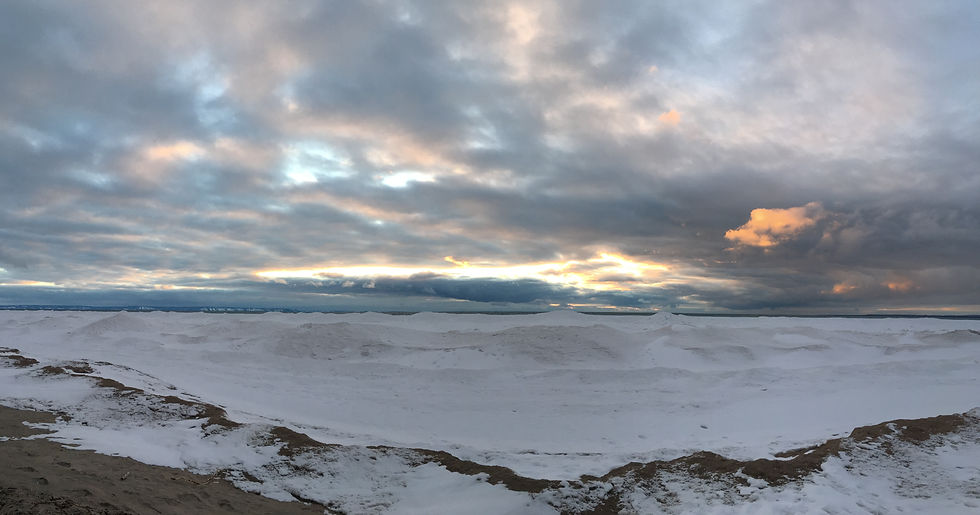
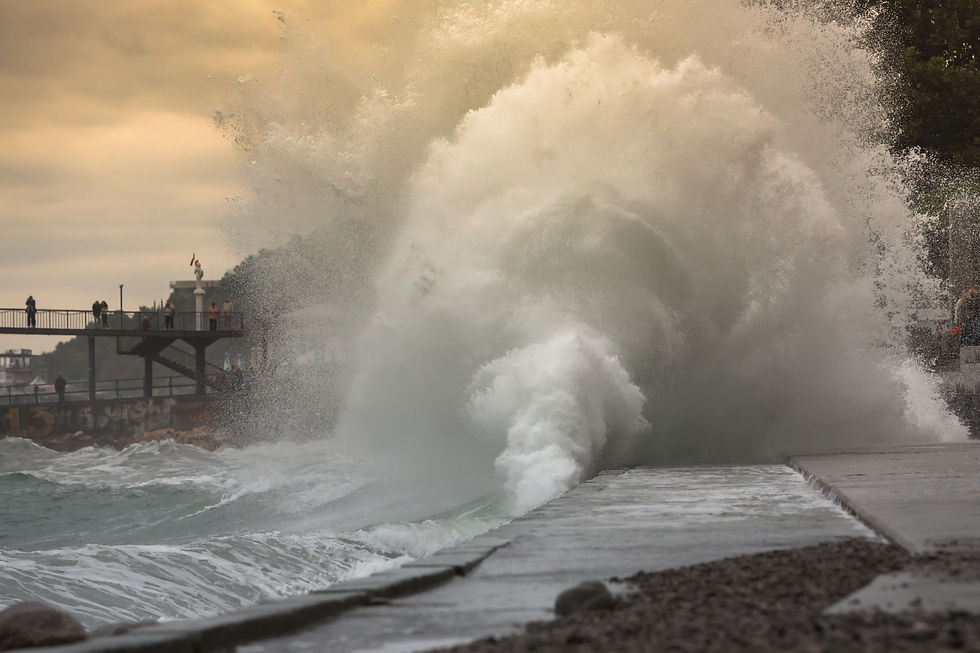
This project is about helping Georgian Bay prepare for a future with more extreme coastal conditions driven by climate change. In recent years, we've seen record-high water levels, stronger storms, reduced winter ice cover, and accelerated shoreline erosion across the Great Lakes region. These changes are affecting wetlands, shorelines, ecosystems, infrastructure, and local communities—but right now, there isn't a comprehensive, science-based picture of where these hazards are most severe, how they interact, or how they're likely to change in the future. A lot of existing information is fragmented, focused on individual sites, or based only on historical observations.
Our team is building what I'd call a "coastal resilience map" for Georgian Bay. We're combining advanced computer models, the same type of physics-based approaches used in ocean and climate science, with artificial intelligence (AI) and environmental data to understand where flooding and erosion are most likely to happen, both now and in the future. We simulate water levels, waves, storms, sediment movement, ice dynamics, and shoreline change under present-day and future climate conditions; all tailored specifically for the unique and highly diverse coastline of Georgian Bay—rocky headlands, sandy beaches, wetlands, and erodible bluffs.
One exciting part of the project is that we're also developing AI tools that can rapidly predict coastal hazards without needing to run extremely time-consuming simulations every time. That means communities and organizations can access useful information much faster.
Ultimately, the goal is to turn all of this science into practical, map-based tools and datasets that Georgian Bay Forever and its partners can actually use for conservation planning, community decision-making, and long-term climate adaptation. We want to bridge the gap between what advanced coastal science can tell us and what people on the ground need to protect their shorelines and ecosystems.
How did you get started in this area of research? What interests you about this field of study?
I have always been fascinated by water and the natural environment. Growing up, I was deeply interested in how lakes, oceans, weather, and climate interact with each other. That curiosity eventually led me to study oceanography and environmental fluid dynamics during my academic training.
When I came to Michigan Tech 13 years ago, and began working along the shores of Lake Superior, it became clear to me that these lakes are some of the most dynamic and underappreciated water systems in the world. They behave in many ways like inland oceans—they generate their own weather, influence regional climate, produce powerful storms and waves, and respond very dynamically to climate change. Over the years, my team and I have developed high-resolution Great Lakes modeling systems that allow us to simulate how these lakes respond to weather, climate, and changing conditions. We’ve used these modeling systems to help federal and state agencies, regional planners, and local communities better understand flooding, extreme water levels, ice dynamics, and coastal hazards across the Great Lakes.
What motivates me most is that this research has very real impacts on people and ecosystems. Climate impact is not an abstract future problem, it is already affecting communities, shorelines, habitats, and infrastructure around the Great Lakes. It's one thing to publish a paper about wave dynamics or sediment transport—it's another to put tools in the hands of communities and decision-makers that help them move from reacting to disasters toward proactively preparing for them.
I also find Georgian Bay especially inspiring because it is both environmentally and culturally significant. It contains extraordinary coastal ecosystems, wetlands, islands, and shorelines that deserve long-term protection. Being able to contribute science that helps preserve such an important region is very meaningful to me personally and professionally.
Why does Georgian Bay and the environment at large need this research right now?
The urgency comes from the fact that climate-driven coastal changes are already happening, and our response is lagging behind a new reality: extreme variability. While the 2019–2020 record highs were a dramatic wake-up call for Georgian Bay, the true 'new normal' is a volatile tug-of-war between rapid rises and sudden drops. This unpredictability driven by shifting evaporation and intense storm surges means that today's flooded dock can become tomorrow's stranded shoreline, leaving communities and ecosystems caught in a constant state of transition.
What we're seeing now is part of a larger trend associated with climate change. Warmer temperatures are altering precipitation patterns, storm intensity, evaporation, and winter ice conditions across the Great Lakes region. Reduced ice cover is a particularly important compounding factor: ice used to act as a natural shield, protecting shorelines from wave energy during the coldest months. As ice cover declines, shorelines are exposed to powerful waves during seasons when they were historically protected. That means erosion is happening faster and in places where it didn't used to be a concern. The critical point is that the future climate system will not necessarily behave like the past.
One major challenge is that we still lack detailed, integrated scientific information about where the greatest risks are located and how those risks may evolve. Georgian Bay's coastline is incredibly diverse—rocky headlands, sandy beaches, wetlands, erodible bluffs—and each responds to climate stresses differently. We need an integrated, Bay-wide assessment that accounts for how extreme water levels, wave dynamics, sediment transport, and ice conditions interact across this complex coastline.
This research is needed now because it provides a forward-looking assessment of coastal vulnerability. Instead of simply documenting damage after it occurs, we are trying to identify vulnerable areas before future hazards happen. Georgian Bay contains significant freshwater ecosystems and biodiversity, protecting these environments requires understanding how physical processes like waves, flooding, erosion, and changing ice conditions affect the landscape over time. The sooner we develop reliable science-based tools, the more effectively we can reduce future environmental and economic impacts.
How will this project affect the ecosystem of the Georgian Bay area and the Great Lakes in the long run?
This project is designed to create long-term scientific and management benefits rather than immediate physical changes to the environment. The greatest impact will come from improving our ability to anticipate and respond to coastal risks before they become severe environmental problems.
In the near term, the project will identify which shorelines are most vulnerable to flooding and erosion and where erosion hotspots are developing. That information alone is highly valuable, it allows conservation organizations like Georgian Bay Forever to prioritize where to focus stewardship efforts, where habitat protection is most urgent, and where climate adaptation strategies are needed most.
The ripple effect comes from how the information gets used over time. The geospatial hazard maps, datasets, and AI-driven screening tools we're developing are designed to be durable and reusable. They can be updated as new data becomes available, applied to new scenarios as climate projections evolve, and used by a wide range of partners, e.g. municipalities, First Nations, government agencies, and other conservation groups. That means the project creates a shared knowledge base that grows in value over the years.
Another important long-term contribution is that Georgian Bay can serve as a model system for broader freshwater coastal resilience research. The methods, tools, and integrated modeling framework we develop here can be adapted and applied to other vulnerable Great Lakes coastal regions facing similar climate challenges.
Ultimately, the goal is to help communities and ecosystems become more resilient, to move from reactive responses after a disaster to proactive planning that anticipates change. That shift in approach is what protects wetlands, preserves shoreline habitats, safeguards water quality, and supports the long-term ecological health of Georgian Bay and the Great Lakes as a whole. Even beyond science and policy, I hope the project helps strengthen public awareness that protecting coastal ecosystems and preparing for climate change must go hand in hand.

What advice would you give to individuals who want to help create a more sustainable environment?
One of the most important things people can do is recognize that sustainability is not only about large global actions, it is also about consistent local stewardship and long-term thinking. Environmental systems are interconnected, and small decisions about shoreline management, land use, water protection, and community planning can collectively have major impacts over time.
I would encourage individuals to pay attention to the water and land around them. Environmental change doesn't always announce itself with a dramatic event. Sometimes it's a shoreline that looks a little different each year, a wetland that's shrinking, or ice that forms later and melts earlier than it used to. Local observations matter enormously. In fact, this project includes a community crowdsourcing component precisely because the people who live along Georgian Bay notice things that satellites and models can miss.
Stay informed, and engage with the science. You don't have to be a scientist to understand a hazard map or a flood risk assessment. When organizations like Georgian Bay Forever share information about coastal risks or ecosystem health, take the time to look at it and think about what it means for your community. Informed citizens make better advocates and better decision-makers. And support the organizations doing the work like GBF are essential connectors between science and action, translating complex research into real conservation outcomes.
I also believe collaboration is essential. Many environmental challenges cannot be solved by scientists alone. Effective solutions require partnerships among researchers, communities, Indigenous groups, conservation organizations, policymakers, and residents. Climate resilience is not just about reacting to disasters; it is about preparing thoughtfully for the future. The earlier we invest in understanding environmental change and building adaptive capacity, the more successful we will be at protecting ecosystems and communities.
Finally, we are entering a period where advanced technologies such as AI, environmental sensing, and Earth system modeling will become increasingly important tools for protecting our planet. The world needs people who can bridge rigorous science with practical outcomes and that's exactly the kind of work this project represents.

Dr. Pengfei Xue, Michigan Technological University, Associate Director, Great Lakes Research Center
Professor, Civil, Environmental, and Geospatial Engineering
Director, Center for Environmental Engineering, Sensing, and Integrated Modeling


