The Problem with Big Grass Lawns
By Laura Thipphawong

What do you think of when you think of a lush, sprawling, green lawn that seems to go on forever? Unfortunately, we see a see a giant carbon footprint. While an extensive green carpet for a lawn has been one of the major signifiers of wealth, luxury, and success for centuries, we’re now seeing a shift away from its popularity, and favouring more environmentally conscious alternatives that save on water and reduce the carbon footprint.
So, let’s break down the cultural obsession with a grassy lawn, the major environmental drawbacks, and get to the bottom of why we’re ready to give up on this high-maintenance and unsustainable style of landscaping.
A History Lesson
It All Started with the English Lawn
The grass obsession started in England in the 17th century, when maintaining a vast swath of flat green grass indicated to others that your land was used purely for aesthetic and recreational purposes—you didn’t need the land for farming. The lawns required intensive and continuous labour to keep the turf pristine, so only the most wealthy and powerful had a flawless green lawn.

The Suburban Must-Have
Over time, the vast green lawn as a social signifier became indelible in Western culture, evolving from the Jacobian-era English lawns into the mid-20th-century suburban landscape. In the post-WWII era of excessive consumerism and an economic boom, accessibility of household accessories like the lawnmower, along with the availability of chemical treatments, such as pesticides, ushered in a new standard for the upper and middle classes. A green carpet lawn was practically a non-negotiable element of a suburban home. It was not only a showcase of your personal success, but could also be considered a sign of courtesy to your neighbours, as the perfectly manicured grass lawn was the widely preferred aesthetic.

A Slight Decline and a Pivotal Stage
With the homogenous grass lawn reaching peak popularity in the 1960s, its prevalence in suburban areas has nonetheless stood the test of time, thanks in part to the proudly materialist attitudes of the 80s. Subsequent decades, however, saw an introduction to environmentalism in mainstream culture, leading to the widespread awareness of human-caused climate change and the normalization of concern for nature. Gone are the days of the kooky, tree-hugging environmentalist trope on TV and other media. In contemporary times, it’s no longer considered quirky or off-putting to take personal accountability for environmental health. These days, it can often be more socially prestigious to do good and care about the planet.

Why People Are Making the Choice to Ditch the Grass Lawn
Changing Climate
Depending on where you live, drought is becoming a regular occurrence, and in some areas, the government has stepped in to regulate water usage. In California, the severity of droughts has led, at times, to harsh restrictions on the use of water for landscaping, limiting and sometimes banning it altogether. Knowing that turfgrass is the water-guzzling option, people are opting instead for rock gardens or plants that require little to no water. Even here in Ontario, summers can vacillate between soaking wet to dry and scorching hot, and drought is becoming an increasingly serious issue. Homeowners are faring better with more adaptable and resilient landscaping choices.
Low lake levels in California
Consider water like money in the bank—even if you know more money will come, you can’t spend more than what you have at any given time, and if you severely deplete your budget, it can take years to recoup those losses. Water is the same way; it may recover over time, but it can take years, even decades. If every person, business, farm, and industry is freely using water at a rate faster than it can replenish, disaster is inevitable.
Now consider a 1000-square-foot lawn. It requires about one inch of water once a week to stay healthy and green. That adds up to 625 gallons, the equivalent of 20 standard bathtubs, or 10,000 cups of water. In summer months, Canadians spend roughly 50% of their water usage on their lawns, and much of that water is potable.

Sustainability
On top of diverting vast amount of drinking water, a lawn is also bad for biodiversity. At a time when we need all the pollinators we can get, a grassy monoculture offers nothing by way of food, shelter, shade, or habitat for wildlife. Biodiversity is absolutely crucial for the sustainability of bees, moths, butterflies, and other pollinators, who facilitate the reproduction of nearly a third of food crops.
Speaking of food, if you have the space for a lawn, you have the space to grow your own fruits and vegetables. Growing your own crops can require just as much water as a lawn, but doing so reduces emissions from food transportation, saves on the grocery bill, and increases biodiversity: all in all, a net positive.
Maintenance
Opting for a garden instead of a lawn may be more work at the start, but a low-maintenance garden full of native plants and perennials requires less water and upkeep than the continuous watering and mowing needs of a lawn, which will likely cost more money as well.
Another big concern is the chemical component, with lawns often requiring large amounts of fertilizers, pesticides, and other additives in order to stay immaculately green.
Alternative Landscaping
Native Gardens
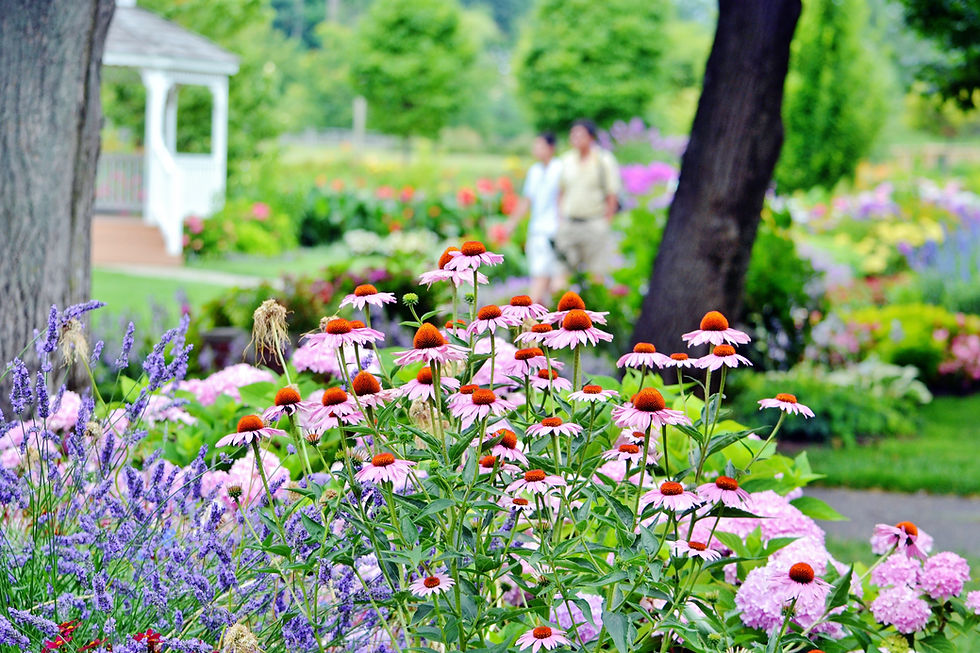
Native gardens have deep root systems that can more easily access groundwater, which means they require less watering from up top. Native plants are more adaptable to their native environment as well, meaning they require less fertilizers and pesticides. Native plants attract pollinators, and promote biodiversity, and in addition, they store carbon, reducing the carbon footprint compared to a lawn that creates emission through gas-powered mower maintenance.
Xeriscaping, or Dry Landscaping
When people think of xeriscaping, they often conjure up images of cactuses, but it’s not just for desert climates. Xeriscaping in Ontario can include the use of native gardens along with stone walkways to fill in space where grass would be otherwise. Gravel, decorative stones, pavers, and mulch can also be used to fill space, and ground covers like moss, sedum, and drought-tolerant succulents like hens and chicks are excellent at suppressing weeds and retaining moisture in soil.
Ways to Conserve Water with a Lawn
Okay, okay, so we can’t convince you to ditch the lawn. You love it—end of discussion. But maybe we can offer something in the way of advice for keeping your lawn as eco-friendly as possible.
Tips for Conserving Water When You Have A Grass Lawn
Water deeply and less frequently – Watering all at once, about once a week instead of daily or multiple times a week can encourage a deeper root system, which is more drought-resistant.
Mow high – a three-inch lawn creates more shade, which reduces evaporation when watering the lawn.
Use upcycled water – get a rain barrel or other water-collection system so you can water the lawn with non-potable water.
Water in the morning or evening – watering when the sun is not up will reduce evaporation.
We know a grass lawn can be lovely, and it comes with some big advantages, like being kid-and pet-friendly. But moderating or downsizing your grass lawn is a great way to reduce your carbon footprint, and a fantastic opportunity to introduce biodiversity into the area and contribute to a sustainable environment. No matter how you choose to do your landscaping, do it with intention, and always consider your impact on this planet.